Roofing Dumpster in Oakland
A roofing dumpster in Oakland gives crews a controlled loading point for shingles, underlayment, flashing, nails, and approved tear-off debris while protecting driveway access and supporting timely cleanup.
- Home
- Roofing Dumpster Rentals
Keep Tear-Off Debris Moving With One Controlled Point
A shingle dumpster helps roofing crews remove waste as each roof section is stripped instead of allowing heavy debris to accumulate around ladders, walkways, landscaping, or staging areas. Proper placement can shorten carrying distance, support driveway protection, and keep roofing cleanup aligned with installation progress and final pickup.
- Contain Shingles Near Active Tear-Offs
- Reduce Repeated Ground-Level Debris Handling
- Protect Driveway Access During Roofing
- Coordinate Pickup With Crew Progress
- Keep Nails Away From Walkways
What Size Dumpster Is Best For A Roof Tear-Off Project?
The right container size depends on roof area, number of shingle layers, decking removal, material density, access, and weight allowance. A roof tear-off dumpster may appear to have open space while already carrying substantial weight because asphalt shingles are denser than many household or construction materials.
A roll-off dumpster for roofing should also fit the property without blocking ladders, vehicles, material deliveries, or the pickup route. For many projects, a roofing dumpster in Oakland should be selected only after discussing the roofing system, expected tear-off volume, driveway placement, accepted roofing materials, and whether a mid-project pickup may be needed.
Match The Dumpster Size To The Roofing Project Waste
A dumpster for shingle removal may support a full roof replacement, partial tear-off, storm-damage repair, or decking replacement. The container plan should reflect the roofing materials, crew loading method, property layout, and amount of debris expected from each stage.
Contractors Removing Shingles
Roofing contractors can load approved asphalt shingles, felt, underlayment, flashing, packaging, and other tear-off materials into one designated roofing debris dumpster.
Homeowners Replacing Roofs
A roof replacement dumpster gives homeowners and hired crews a defined place for waste while old materials are removed and new roofing is installed.
Crews Replacing Decking
Damaged roof decking, sheathing, fasteners, and approved wood waste may require additional capacity beyond the volume created by shingles alone.
Remodelers Opening Rooflines
Additions, skylight work, structural changes, and partial roof removal may create mixed roofing debris that should be reviewed before container delivery.
Roofing Cleanup Support For Scheduled Waste Removal
Bay Dumpsters coordinates contractor delivery, container placement, and pickup planning around the tear-off sequence. The discussion considers roofing debris, weight allowance, driveway protection, project access, and whether the crew expects one continuous loading period or several stages.
Tear-Off Volume Planning
The rental plan begins with the roof size, shingle layers, decking condition, material type, expected loading pace, and likely container size.
- Shingle Layer Review
- Debris Weight Planning
Property Access Coordination
Customers comparing dumpster rentals for cleanup projects can discuss placement that supports roof access without unnecessarily blocking garages, walkways, material deliveries, or daily vehicle movement.
- Driveway Placement Review
- Pickup Route Planning
Put The Container Where It Shortens Cleanup Time
Coordinate the dumpster with ladders, roof edges, crew movement, driveway use, and material deliveries. Bay Dumpsters helps align placement and pickup with the roofing schedule.
Follow The Roof Replacement Cleaning
Roofing disposal should support tear-off, decking review, active installation, ground cleanup, and final collection without blocking contractor vehicles, ladders, or replacement material deliveries.
Prepare Before Tear-Off
Confirm roofing layers, container placement, driveway clearance, expected weight, and space for incoming materials.
Load During Removal
Move shingles, underlayment, flashing, nails, and damaged decking toward one controlled disposal point.
Finish After Sweeping
Complete the final nail sweep, inspect surrounding areas, clear truck access, and arrange collection.
Prepare The Property Before Roofing Debris Piles
Early preparation helps protect access, limit scattered nails, reduce loading delays, and keep the dumpster ready for both crew use and final collection.
- Confirm The Roofing Material Type
- Estimate All Existing Shingle Layers
- Identify Damaged Decking Removal Needs
- Choose A Stable Driveway Surface
- Preserve Ladder And Crew Access
- Move Vehicles Beyond Delivery Clearance
- Protect Walkways Near Loading Areas
- Check Wires And Overhead Branches
- Confirm The Expected Pickup Timing
- Review Accepted Roofing Materials First
Control The Heaviest Cleanup Before It Slows Roof Replacement
A roofing cleanup dumpster gives crews a direct route for removing shingles, underlayment, fasteners, and damaged materials. When placement and pickup match the tear-off sequence, less debris remains scattered around the property, and the ground-level work area stays easier to manage.
Tear-Off Flow Improves
Placing the container near the active roof edge can shorten carrying and transfer distances. Crews can move removed materials into the dumpster sooner, reducing the amount of roofing debris temporarily stored around ladders, lawns, walkways, and work zones.
Shingle Weight Gets Managed
Asphalt shingles can consume weight allowance before a container appears full. Discussing roof area, shingle layers, and decking removal helps determine whether the project needs a different container size, limited loading depth, or an additional pickup.
Driveway Use Stays Planned
Driveway protection and access planning help prevent the dumpster from interfering with garage doors, parked vehicles, roofing deliveries, or crew movement. The surface condition and final pickup route should be discussed before the container is positioned.
Final Cleanup Starts Earlier
A centralized roof replacement dumpster reduces the number of debris piles left for the end of the project. Crews can control waste throughout the tear-off, making final magnet sweeping, nail collection, and property cleanup more focused.
Roofing Service For The Actual Tear-Off Schedule
The roofing dumpster service Oakland customers receive from Bay Dumpsters is planned around debris weight, placement, loading pace, and pickup timing. Roofing contractors and property owners can discuss the container before shingles begin coming off the roof.
Contractor Rental Support
A contractor dumpster rental can be coordinated around crew arrival, roof removal, material delivery, and the expected completion of the tear-off stage.
Container Range Planning
A 20-yard roll-off dumpster may suit certain roofing projects, but actual fit depends on shingle layers, decking removal, weight, and available placement space.
Roofing Waste Coordination
The service discussion covers shingles, underlayment, flashing, wood debris, fasteners, container access, and any materials that may require separate handling.
Avoid The Planning Errors That Create Pickup Problems
Roofing dumpster issues often begin with underestimated shingle layers, unplanned decking waste, poor placement, or loading decisions that ignore material density.
- Underestimating Existing Shingle Layer Count
- Ignoring Damaged Decking Removal Volume
- Mixing Dense Materials Without Approval
- Blocking Ladders Or Material Deliveries
- Loading Shingles Beyond Weight Allowance
- Delaying Pickup Until Installation Finishes
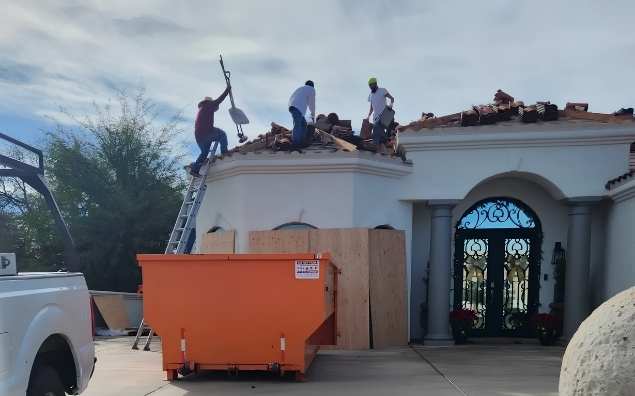
Well-Planned Roofing Cleanup Visible Around
Customers and contractors often value clear placement planning, understandable loading requirements, timely pickup coordination, and reduced debris around walkways and landscaping. These details help the roof replacement progress without allowing cleanup demands to overtake the site.
Trustindex verifies that the original source of the review is Google. Thank you for being so quick and responsive on everything. Great service!!!!Posted on GoogleTrustindex verifies that the original source of the review is Google. Great customer service from start to finish! They were pleasant to work with, professional, and did an excellent job. Everything was handled exactly as promised, making the whole process easy and stress-free. I would definitely recommend them to anyone needing a reliable dumpster rental service.Posted on GoogleTrustindex verifies that the original source of the review is Google. Excellent service from Bay Dumpsters! They were punctual, professional, and friendly from start to finish. The dumpster was delivered on time, and pickup was quick and hassle-free. They did an outstanding job, and the entire process was smooth and easy. I highly recommend Bay Dumpsters to anyone looking for reliable and professional dumpster rental service. Thank you for the great work!Posted on GoogleTrustindex verifies that the original source of the review is Google. Hired Jesus to assembly some garage and balcony shelves. He did a great job putting everything together and installing them. Very tidy, cleaned everything up before he left and took all the packaging away with him. Very easy to talk and communicate with also.Posted on GoogleTrustindex verifies that the original source of the review is Google. Very professional, punctual and easy to do business with.Posted on GoogleTrustindex verifies that the original source of the review is Google. On time and fair pricePosted on GoogleTrustindex verifies that the original source of the review is Google. We had piles of trash left from a previous tenant and the boys came in cleared it all up and hauled it away fast. Price was exactly what he told me it was going to be and no funny business. I recommend them wholeheartedly.....Posted on GoogleTrustindex verifies that the original source of the review is Google. Besides their dumping service, Jesus and his team do handy work and were able to run a waterline to my fridge. They were thorough and careful, stopping by the day before to look at the fridge and the crawlspace and ensure they had all the proper tools and parts. I should have called them much sooner!Posted on GoogleTrustindex verifies that the original source of the review is Google. Jesus and his crew are true professionals! They did great work for me- they were timely, communicative, friendly, knowledgeable, and very reasonably priced. I highly recommend them!Posted on GoogleTrustindex verifies that the original source of the review is Google. Quick and easy to contact and deliver! Recommend 110%!!!!!
Frequently Asked Questions
Capacity depends on roof area, shingle type, layer count, decking removal, and weight allowance. Two roofs with similar square footage may create different loads if one has multiple shingle layers or heavier materials. Container selection should be based on both volume and density.
Asphalt shingles are dense and become heavier when layered tightly inside a container. Additional felt, flashing, nails, and damaged decking also increase weight. For roofing projects, visible container space does not always indicate how much allowable loading capacity remains.
Some common roofing materials may be compatible, but the complete load should be discussed before delivery. Wood decking, metal flashing, insulation, masonry, solar components, chemicals, and other materials may affect weight, separation requirements, or the appropriate disposal method.
Placement should shorten the debris path from the roof while preserving garage access, ladders, material deliveries, walkways, and the truck route required for pickup. The driveway or staging surface should be stable, clear, and discussed before the delivery vehicle arrives.
Driveway protection depends on surface condition, container type, delivery method, and provider procedures. Homeowners should disclose cracks, slopes, decorative surfaces, or weak areas before delivery. Protective measures should be confirmed directly rather than assumed after the container reaches the property.
Pickup timing should reflect the project sequence, available space, debris volume, and whether additional roofing waste will be generated. Removing the container too early may create another disposal problem, while keeping a full container may obstruct material delivery or property access.
Roofing nails and small approved fragments are commonly generated during tear-off, but they should remain contained within the dumpster rather than scattered around the property. Crews should also complete ground-level cleanup because nails may fall outside the loading area during roof removal.
Not always. A 20-yard container may work for some roofing projects, but shingle layers, roof size, decking replacement, weight allowance, access, and local service conditions all affect suitability. A smaller or differently planned container may be more appropriate for dense loads.
Keep Roofing Debris Moving Before It Takes Over The Property!
Plan the dumpster around the roof size, shingle layers, driveway access, and pickup timing. Contact Bay Dumpsters to coordinate roofing waste removal for your Oakland project.